Diamou: Senegal’s Gum Tattooing Tradition and Fulani Beauty Ritual
· 7 min read
🇬🇧 One of the last conversations I had with my mother was about this time-honoured tradition.
I had asked her to find a photograph of my grandmother that showed her Diamou, the distinctive black gum tattoo that was once a celebrated symbol of beauty across parts of West Africa. She never found the picture, but she shared something even more valuable: the stories behind the tradition.
What is Diamou?
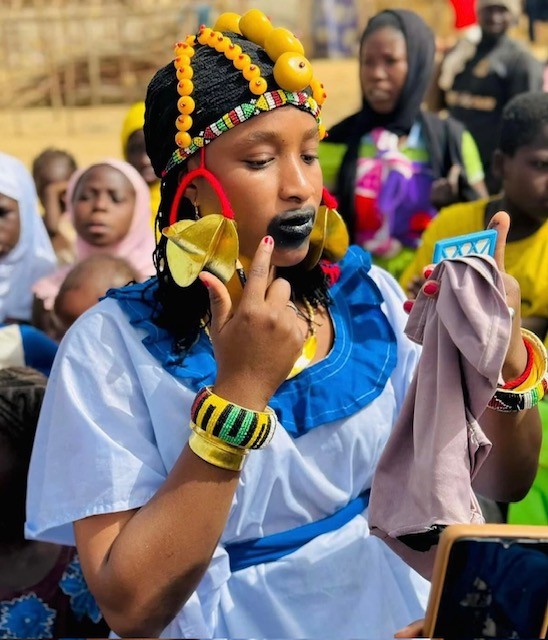
Diamou is the traditional practice of gum tattooing, an ancient beauty ritual believed to have originated among the Fulani (Peul/Fulɓe) people in the Djolof region of Senegal before spreading to other ethnic groups, including the Wolof. Variations of the practice can also be found in neighbouring countries such as Mali, as well as farther east in Ethiopia and Eritrea.
The process involves inserting dark pigments—traditionally made from soot, charcoal or other natural materials—into the gums using fine needles. The result is a striking black pigmentation that creates a dramatic contrast with the whiteness of the teeth, making the smile appear brighter and more defined. Tattooing also extended to the lips and the contours of the mouth.
Until the late 1950s, tattooing was often performed using a splinter of wood from a tree known as oulbi in the Fulani language. The practitioner repeatedly pierced the gum tissue to work the pigment deep into the skin. The procedure was extremely painful and could be repeated several times over several days to achieve a rich, even colour that would last for life.
More than a Beauty tradition
Although Diamou eventually became a purely aesthetic practice, it began as something much deeper.
Among the Fulani, it was a rite of passage marking a young girl’s transition into adulthood and her eligibility for marriage. Enduring the procedure without crying was considered a demonstration of bravery, resilience and family honour. It was believed that learning to withstand pain prepared young women for the hardships they would face throughout their lives, particularly during childbirth.
But my mother told me there was another lesson hidden within the ritual.
She explained that Diamou also taught young women the importance of restraint in speech. It was about learning when to speak, when to listen and understanding that wisdom often lies in choosing the right moment to use your voice. Whether or not we share those values today, they reveal how our ancestors used physical rituals to pass on social and moral teachings.
She also remembered how peanuts were roasted until they became completely charred. That blackened material, she recalled, was the substance used to darken the gums and the mouth.
Beauty, Health and Cultural Identity
For generations, darkened gums were associated with femininity, elegance and desirability. A beautifully tattooed smile was seen as enhancing a woman’s appearance and increasing her attractiveness to potential partners.
Beyond aesthetics, Diamou was also believed to have medicinal benefits. Many communities thought the treatment could strengthen the gums, reduce bleeding, combat bad breath and improve overall oral health, although these beliefs have not been supported by modern scientific evidence.
Is Gum Tattooing still practised today?
Like many traditional African beauty customs, gum tattooing has become increasingly rare. Urbanisation, changing beauty standards, improved dental care and greater awareness of hygiene have all contributed to its decline.
However, the tradition has not disappeared entirely.
A small number of practitioners in Senegal continue to offer gum tattooing, often in cleaner, more clinical environments with improved sterilisation practices. Today, those who choose Diamou are usually motivated by cultural pride, family heritage or a desire to preserve an ancestral tradition rather than by social expectation.
For me, however, Diamou is about far more than beauty.
It is a reminder of one of the last conversations I had with my mother, one that transformed a fading cultural practice into a family memory. Traditions may evolve or disappear, but the stories behind them continue to connect us to the generations that came before us.
As beauty trends come and go, Diamou reminds us that beauty has never been universal. Every culture has its own rituals, symbols and ideals, each telling a story about identity, belonging and the women who came before us. Looking back at traditions like this isn’t about bringing them back, it’s about recognising that beauty has always been deeply personal, deeply cultural and, above all, a reflection of who we are.
© N’Deye S. Somparé
DIAMOU: LA TRADITION SÉNÉGALAISE DU TATOUAGE DES GENCIVES ET LE RITUEL DE BEAUTÉ PEUL
🇫🇷 L’une des dernières conversations que j’ai eues avec ma mère était à propos de cette pratique ancestrale.
Je lui avais demandé de retrouver une photographie de ma grand-mère où l’on pouvait voir son Diamou, ce tatouage noir des gencives qui fut autrefois un symbole de beauté largement célébré dans plusieurs régions d’Afrique de l’Ouest. Elle n’a jamais retrouvé cette photo, mais elle m’a transmis quelque chose d’encore plus précieux : les histoires qui se cachent derrière cette tradition.
Qu’est-ce que le diamou?
Le Diamou est la pratique traditionnelle du tatouage des gencives, un ancien rituel de beauté dont l’origine est généralement attribuée aux Peuls (Fulɓe) de la région du Djolof, au Sénégal, avant de se diffuser auprès d’autres groupes ethniques, notamment les Wolofs. Des variantes de cette pratique existent également dans des pays voisins comme le Mali, ainsi qu’à l’est, en Éthiopie et en Érythrée.
Le procédé consiste à introduire des pigments foncés — traditionnellement de la suie, du charbon de bois ou d’autres matières naturelles — dans les gencives à l’aide de fines aiguilles. Le résultat est une pigmentation noire intense qui crée un contraste saisissant avec la blancheur des dents, rendant le sourire plus éclatant et mieux défini. Le tatouage pouvait également s’étendre aux lèvres et au contour de la bouche.
Jusqu’à la fin des années 1950, le tatouage était souvent réalisé à l’aide d’une écharde de bois provenant d’un arbre appelé oulbi en langue peule. La praticienne perçait à plusieurs reprises les gencives afin d’y faire pénétrer profondément le pigment. L’intervention était extrêmement douloureuse et pouvait être répétée plusieurs fois sur plusieurs jours afin d’obtenir une coloration uniforme, intense et permanente.
Bien plus qu’un rituel de beauté
Si le Diamou est progressivement devenu une pratique purement esthétique, il était à l’origine porteur d’une signification bien plus profonde.
Chez les Peuls, il constituait un rite de passage marquant l’entrée d’une jeune fille dans l’âge adulte et son accession au statut de femme en âge de se marier. Supporter l’intervention sans verser une larme était considéré comme une preuve de courage, de résilience et d’honneur familial. On pensait que cette capacité à endurer la douleur préparait les jeunes femmes aux épreuves de la vie, notamment à l’accouchement.
Mais ma mère m’a expliqué qu’une autre leçon se cachait derrière ce rituel.
Selon elle, le Diamou enseignait également aux jeunes filles l’importance de la retenue dans la parole. Il s’agissait d’apprendre quand parler, quand écouter et de comprendre que la sagesse réside souvent dans le choix du bon moment pour faire entendre sa voix. Que l’on adhère ou non à ces valeurs aujourd’hui, elles témoignent de la manière dont nos ancêtres utilisaient les rituels corporels pour transmettre des enseignements sociaux et moraux.
Elle se souvenait aussi que des cacahuètes étaient grillées jusqu’à être entièrement carbonisées. C’est cette matière noire, racontait-elle, qui servait à foncer les gencives et l’intérieur de la bouche.
Beauté, Santé et identité culturelle
Pendant des générations, les gencives noircies ont été associées à la féminité, à l’élégance et à la désirabilité. Un sourire magnifiquement tatoué était considéré comme un atout qui embellissait une femme et renforçait son pouvoir de séduction.
Au-delà de l’aspect esthétique, le Diamou était également réputé pour ses vertus médicinales. De nombreuses communautés pensaient qu’il permettait de renforcer les gencives, de réduire les saignements, de combattre la mauvaise haleine et d’améliorer la santé bucco-dentaire, bien que ces croyances ne soient pas étayées par les connaissances scientifiques actuelles.
Le tatouage des gencives est-il encore pratiqué aujourd’hui?
Comme de nombreuses traditions de beauté africaines, le tatouage des gencives est devenu de plus en plus rare. L’urbanisation, l’évolution des critères de beauté, l’amélioration des soins dentaires et une meilleure sensibilisation aux règles d’hygiène ont largement contribué à son déclin.
Cependant, cette tradition n’a pas totalement disparu.
Quelques praticiennes continuent encore de proposer le tatouage des gencives au Sénégal, souvent dans des environnements plus propres, proches d’un cadre clinique et respectant de meilleures normes de stérilisation. Aujourd’hui, celles qui choisissent le Diamou le font généralement par fierté culturelle, pour honorer leur héritage familial ou préserver une tradition ancestrale, plutôt que par pression sociale.
Pour moi, cependant, le Diamou représente bien plus qu’un simple idéal de beauté.
Il me rappelle l’une des dernières conversations que j’ai eues avec ma mère, une conversation qui a transformé une pratique culturelle en voie de disparition en un précieux souvenir familial. Les traditions évoluent ou disparaissent, mais les histoires qui les accompagnent continuent de nous relier aux générations qui nous ont précédés.
À l’heure où les tendances beauté vont et viennent, le Diamou nous rappelle que la beauté n’a jamais été universelle. Chaque culture possède ses propres rituels, ses symboles et ses idéaux, chacun racontant une histoire d’identité, d’appartenance et des femmes qui nous ont précédés. Se pencher sur ces traditions ne signifie pas vouloir les faire revivre, mais reconnaître que la beauté a toujours été profondément personnelle, profondément culturelle et, plus que tout, le reflet de ce que nous sommes.
© N’Deye S. Somparé

N'Deye
Esthetician trained at Aveda in New York, with a specialization in aromatherapy. I created BalkisBeauty to help you see through the gimmicks and find what works for you.
Read my story →