Maman
· 5 min read
🇬🇧 I’ve tried to write this twice now. Not because I can’t find the words, but because putting them down still feels impossibly heavy.
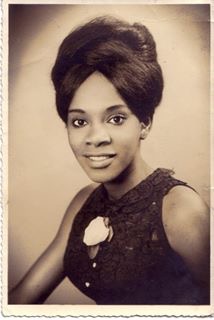
Just last month, October 8th, would have been my mother’s 79th birthday. She left us only a month before, yet her presence lingers in every corner of my mind.
I created this blog as a tribute to her elegance, her Fulani heritage, and the timeless beauty rituals she carried with such pride, always insisting they traced all the way back to Nefertiti herself.
Whenever I think about her and her beauty traditions, the very first thing that comes to mind is her love of perfume. As I gently packed away her belongings—one of the hardest things I’ve ever done—I found not only the Arab fragrances she adored and felt deeply connected to as a Muslim woman, but also a collection of mainstream perfumes shaped by the same rich, powerful scent profiles, like Kurkdjian’s iconic oud.
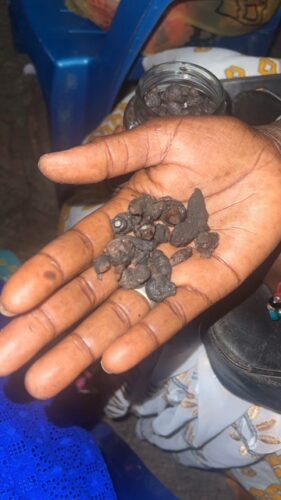
But her true love was thiouraye, the fragrant incense cherished by Senegalese women through generations. A fragrant blend of resins, woods, and spices, thiouraye is deeply personal; each woman treasures her own recipe, lovingly passed down through generations. She used it to perfume our house and delicately scent her clothes, enveloping herself and her space in her signature scent. These rituals were her anchor, a way to preserve a sense of self in a world that often felt foreign and unwelcoming, a world that mistook her elegance for condescension. Her strength lay in holding on to these sacred practices, even as everything around her shifted constantly.
Gongo, an old-fashion Senegalese recipe similar to thiouraye, was always placed in her bra as the last touch before she went out. This solid perfume could also be used in clothing drawers.
When I was younger, she had her trusted favourites: Dax for her hair, Jeanne Gatineau and Jeanne Piaubert for her skincare, and Lait Candès to remove her makeup at night, the French way, with a gentle cleansing milk.
She was never what we would call “high maintenance” by today’s standards, and yet, she upheld an elegance rooted in discipline. She demanded care of herself and of those around her, especially when it came to personal hygiene and the art of presenting oneself to the world.
She never wore much makeup, for example. An eyebrow pencil and a brown lipstick were her only non-negotiables. Lately, though, she developed the most endearing fascination with MAC foundations and powders. I used to tease her, asking, “To go where, though?” But we got them for her anyway.
She was never without hand cream; dry hands were, to her, a sign of neglect, something she could not abide.
I can still picture her, tweezers in hand, shaping her brows with quiet precision. She never entrusted them to anyone else. For a while, she fell in love with microblading. I felt a great deal of joy seeing her enquire about this procedure, far removed from the obligations and duties that had defined her entire life. A bit of lightness after having had to be so serious all her life to ensure her enemies didn’t have the last word.
As I write these words, I feel a deep sense of gratitude and joy. Gratitude for her legacy and the standards she instilled in me. Joy at the memory of a life lived fully and beautifully, in true Senegalese fashion, with style, grace, and impeccable taste.
© N’Deye S. Somparé
🇫🇷 Ça fait deux fois que j’essaye d’écrire ce blog et que je n’y arrive pas. Pas parce que les mots ne trouvent pas leur voie (leur voix ?), mais parce que leur poids rend l’acte d’écriture insurmontable.
Le 8 octobre aurait été le 79 ème anniversaire de ma mère. Elle nous a quitté un mois tout juste auparavant
Ce blog a été créé en hommage à son élégance, à son héritage peuhl et aux rituels de beauté intemporels qu’elle perpétuait avec beaucoup de fierté, clamant qu’ils remontaient à la Reine Néfertiti elle-même.
La première chose qui me vient à l’esprit en pensant à ma mère, c’est son amour du parfum. En rangeant aussi délicatement que possible ses affaires_ une des choses les plus difficiles que j’aie eu à faire, j’ai retrouvé non seulement toutes les fragrances arabes qu’elle affectionnait tant et auxquelles elle se sentait extrêmement liée en tant que femme musulmane, mais aussi des parfums plus mainstream aux notes tout aussi riches et puissantes, comme l’Oud de Kurkdjian.
Mais sa vraie passion était le thiouraye, l’encens des femmes Sénégalaises depuis des générations. Mélange envoûtant de résines, de bois et d’épices, le thiouraye est très personnel : chaque femme conserve précieusement sa propre recette qui se transmet de génération en génération. Elle l’utilisait pour parfumer notre maison et en imprégner délicatement ses habits, s’enveloppant de senteurs qui n’étaient qu’à elle. Ces rituels étaient un point d’ancrage, une façon de préserver son identité et son éducation dans un monde qui lui était étranger et hostile, un monde qui prenait son élégance innée pour de la condescendance. Elle trouvait sa force dans ces pratiques ancestrales.
Le Gongo, ce parfum solide similaire au thiouraye et qui est aujourd’hui passé de mode, était toujours la dernière touche avant de sortir, bien calé dans son soutien-gorge.
Quand j’étais enfant, elle avait ses produits fétiches : Dax pour les cheveux ; Jeanne Gatineau et Jeanne Piaubert pour les soins de la peau ; et le Lait Candès pour se démaquiller le soir, à la Française, avec un lait.
Elle n’a jamais été comme ces filles aujourd’hui qui ont des rendez-vous à l’année pour une manicure ou qui dépensent des fortunes en produits, mais elle était exigeante notamment en matière d’hygiène personnelle et sur la façon de se présenter aux autres.
Ma mère ne s’est jamais beaucoup maquillée par exemple. Elle tenait à son crayon à sourcils et son rouge à lèvres marron. Même si dernièrement elle avait développé une fascination pour les poudres et fonds de teint Mac. Je la taquinais souvent en lui demandant pourquoi elle aurait besoin de ça et pour aller où.
Elle ne sortait jamais sans crème pour les mains ; avoir les mains sèches était pour elle un signe de négligence.
Je la revois encore avec sa pince à épiler à la main, s’épilant les sourcils avec précision. Elle ne les confiait jamais à personne d’autre. Durant un temps, elle s’est entichée du microblading et je ne sais pas pourquoi mais je ressentis beaucoup de joie à la voir s’enquérir de cette procédure, de la découvrir loin des obligations et devoirs qui avaient été les siens toute sa vie. Un peu de légèreté pour elle qui avait dû être si sérieuse toute sa vie pour s’assurer que ses ennemis n’aient pas le dernier mot.
En écrivant ses mots, je ne ressens que gratitude et joie. Gratitude pour son héritage et les valeurs qu’elle m’a transmises. Joie à son souvenir et à celle d’une vie pleinement vécue mais surtout vécue avec grâce et élégance, dans la plus pure tradition Sénégalaise, avec un goût impeccable.
© N’Deye S. Somparé

N'Deye
Esthetician trained at Aveda in New York, with a specialization in aromatherapy. I created BalkisBeauty to help you see through the gimmicks and find what works for you.
Read my story →