How to Heal the Skin After Hydroquinone Damage
· 7 min read
This post contains affiliate links.
As an Amazon Affiliate, I earn from qualifying purchases
🇬🇧 Across Africa, skin bleaching remains widespread, and hydroquinone is one of the ingredients most closely associated with skin lightening. But after months or years of use, some people find themselves dealing with uneven pigmentation, irritation, sensitivity, acne or even skin that appears darker than before.
If you have stopped bleaching and want to repair your skin, the priority shouldn’t be getting your original complexion back as quickly as possible.
First, you need to get your skin healthy again.
HYDROQUINONE ISN’T ALWAYS THE ENEMY
Hydroquinone is a legitimate dermatological treatment used to treat hyperpigmentation, including melasma and post-inflammatory hyperpigmentation.
The problems are more commonly associated with inappropriate use: high concentrations, prolonged use, applications to areas beyond specific pigmentation, or use of unregulated bleaching products.
Some skin-lightening mixtures may also contain potent corticosteroids, making it difficult to know exactly what has damaged the skin.
WHAT DOES HYDROQUINONE-DAMAGED SKIN LOOK LIKE?
Signs can include:
- uneven light and dark patches
- redness, burning or sensitivity
- dry, fragile or irritated skin
- acne and bumps
- rebound hyperpigmentation
- grey, blue-grey or blue-black pigmentation
That last symptom is particularly important. Prolonged hydroquinone use can be associated with exogenous ochronosis, a condition characterised by dark blue-grey pigmentation that can be difficult to treat.
If you suspect ochronosis, see a dermatologist if at all possible, rather than trying stronger bleaching products or acids.
Step 1: Stop Chasing Pigmentation
When you stop bleaching, your skin may become darker and extremely uneven. The temptation is to immediately start using acids, brightening serums or another lightening product.
Don’t.
If your skin burns, stings, flakes or feels uncomfortable, concentrate on repairing it first.
For a few weeks, your routine can be as simple as:
Morning: Gentle cleanser → moisturiser → water resistant SPF 50 PA ++++
Evening: Gentle cleanser → moisturiser
You don’t need a complicated routine to heal your skin.
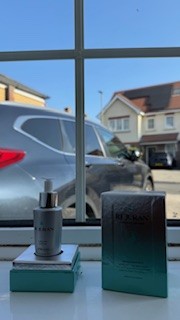
Gently removes impurities without stripping the skin of its natural oils, Vegan

Step 2: Rebuild Your Skin Barrier
Look for simple moisturising ingredients such as ceramides, glycerin and panthenol.
And this doesn’t have to be expensive.
A basic moisturiser containing ceramides may be more useful to compromised skin than an expensive serum promising “radiance.”
Avoid harsh scrubs, lemon juice, undiluted essential oils and aggressive homemade remedies. Natural does not automatically mean gentle.
Repairs 91% of a damaged skin barrier in just 3 days. Provides a protective, nourishing shield that locks out irritants while your skin heals from the inside out. Vegan-certified

Step 3: Protect Your Skin from the Sun
Sun exposure can make uneven pigmentation more noticeable, particularly on melanin-rich skin.
Ideally, use a water-resistant SPF 50 PA ++++ on exposed skin every day.
Sun protection isn’t just sunscreen.
Hats, shade, umbrellas and clothing covering affected areas can also reduce exposure, particularly under intense African sun.
Skin recovering from lightening treatments loses its heat regulation, causing intense sweating that melts standard SPFs right off. This won't run or sting your delicate skin barrier

Step 4: Let Your Melanin Recover
Your natural colour may not return evenly or immediately.
Some areas may darken faster than others, and inflammation itself can create hyperpigmentation. Trying to correct every darker area immediately can restart the cycle of irritation.
Once your skin is comfortable and stable, pigmentation treatments such as azelaic acid may eventually be considered, but introduce one active at a time, slowly.
The perfect beginner active, it safely brightens your complexion while respecting your newly healed moisture barrier.

WHEN SKINCARE ISN’T ENOUGH
Seek medical help where possible for severe burning, wounds, infections, pronounced skin thinning, extensive loss of pigmentation or blue grey/black discoloration.
Established ochronosis cannot simply be moisturised away.
Most importantly, don’t feel pressured to replace one bleaching routine with another complicated skincare routine.
Healing comes first.
The goal isn’t darker skin or lighter skin.
It’s skin that doesn’t hurt, skin that can protect itself and skin that is healthy enough to function properly again.
© N’Deye S. Somparé
COMMENT RÉPARER LA PEAU APRÈS LES DOMMAGES CAUSÉS PAR L’HYDROQUINONE
🇫🇷 Partout en Afrique, le blanchiment de la peau reste très répandu, et l’hydroquinone est l’un des ingrédients les plus souvent associés à cette pratique. Après des mois ou des années d’utilisation, certaines personnes se retrouvent confrontées à une pigmentation irrégulière, des irritations, une sensibilité accrue, de l’acné ou même une peau qui semble plus foncée qu’auparavant.
Si vous avez arrêté le blanchiment de la peau et souhaitez réparer votre peau, votre priorité ne doit pas être de retrouver votre teint d’origine le plus vite possible.
Avant tout, vous devez rétablir la santé de votre peau.
L’hydroquinone n’est pas toujours un ennemi.
L’hydroquinone est un traitement dermatologique légitime utilisé pour traiter l’hyperpigmentation, notamment le mélasma et l’hyperpigmentation post-inflammatoire.
Les problèmes sont le plus souvent liés à une utilisation inappropriée : concentrations élevées, usage prolongé, application sur des zones dépassant la tache pigmentaire ciblée ou utilisation de produits blanchissants non réglementés.
Certains mélanges éclaircissants peuvent également contenir des corticoïdes puissants, ce qui rend difficile l’identification exacte de la cause des dommages cutanés.
À quoi ressemble une peau abîmée par l’hydroquinone ?
Les signes peuvent inclure :
• des taches claires et foncées irrégulières
• des rougeurs, des sensations de brûlure ou une sensibilité accrue
• une peau sèche, fragile ou irritée
• de l’acné et des boutons
• une hyperpigmentation rebond
• une pigmentation grisâtre, bleu-gris ou bleu-noir
Ce dernier symptôme est particulièrement important. Une utilisation prolongée d’hydroquinone peut être associée à une ochronose exogène, une affection caractérisée par une pigmentation bleu-gris foncé difficile à traiter.
Si vous suspectez une ochronose, consultez un dermatologue si possible, plutôt que d’essayer des produits blanchissants ou d’autres acides.
Étape 1 : Cessez de vous focaliser sur la pigmentation
Lorsque vous arrêtez le blanchiment, votre peau peut s’assombrir et présenter une irrégularité marquée. La tentation est grande d’utiliser immédiatement des acides, des sérums éclaircissants ou d’autres produits de ce type.
Ne le faites pas.
Si votre peau brûle, picote, pèle ou est inconfortable, concentrez-vous d’abord sur sa réparation.
Pendant quelques semaines, votre routine peut être très simple :
Matin : Nettoyant doux → crème hydratante → protection solaire waterproof SPF 50 PA++++
Soir : Nettoyant doux → crème hydratante
Vous n’avez pas besoin d’une routine complexe pour soigner votre peau.
Étape 2 : Reconstruisez votre barrière cutanée
Privilégiez des ingrédients hydratants simples tels que les céramides, la glycérine et le panthénol. Et cela ne doit pas nécessairement coûter cher.
Une crème hydratante basique contenant des céramides peut s’avérer plus bénéfique pour une peau fragilisée qu’un sérum coûteux promettant de l’ « éclat ».
Évitez les gommages abrasifs, le jus de citron, les huiles essentielles non diluées et les remèdes maison agressifs. « Naturel » ne signifie pas forcément « doux ».
Étape 3 : Protégez votre peau du soleil
L’exposition au soleil peut accentuer les irrégularités de pigmentation, en particulier sur les peaux riches en mélanine.
L’idéal est d’appliquer quotidiennement une protection solaire à large spectre (SPF 50 PA++++) et waterproof sur les zones exposées.
La protection solaire ne se limite pas à la crème solaire.
Les chapeaux, l’ombre, les parasols et les vêtements couvrant les zones touchées peuvent également réduire l’exposition, surtout sous le soleil intense d’Afrique.
Étape 4 : Laissez votre mélanine se rétablir
Votre couleur naturelle peut ne pas revenir de manière uniforme ou immédiate.
Certaines zones peuvent foncer plus vite que d’autres, et l’inflammation elle-même peut provoquer une hyperpigmentation. Tenter de corriger immédiatement chaque zone plus sombre risque de relancer le cycle de l’irritation.
Une fois que votre peau est apaisée et stabilisée, des traitements contre les troubles de la pigmentation (comme l’acide azélaïque) pourront éventuellement être envisagés, mais introduisez un seul actif à la fois, et progressivement.
Quand les soins ne suffisent pas
Consultez un médecin si possible en cas de brûlures sévères, de plaies, d’infections, d’affinement marqué de la peau, de perte de pigmentation étendue ou d’une coloration bleu-gris ou noire.
Une ochronose installée ne peut pas être traitée par une simple hydratation.
Surtout, ne vous sentez pas obligé de remplacer une routine de blanchiment par une autre routine de soins complexe.
La guérison passe avant tout.
L’objectif n’est pas d’avoir une peau plus foncée ou plus claire.
Il s’agit d’avoir une peau capable de se protéger et une peau suffisamment saine pour fonctionner à nouveau correctement.
© N’Deye S. Somparé

N'Deye
Esthetician trained at Aveda in New York, with a specialization in aromatherapy. I created BalkisBeauty to help you see through the gimmicks and find what works for you.
Read my story →