The colourism conundrum
· 10 min read

🇬🇧 “If only you were as light-skinned as your mom, how beautiful you would have been!”
One of my uncles said this to me one day, as I was making my way to my car in sunny Conakry, minding my business, all dolled up and feeling myself. And despite having heard many variations of this throughout the years due to my mom’s extremely light complexion but also to the fact that I look exactly like her, it still stopped me dead in my tracks. But only for a few seconds, the time for me to realise that this did not even require a reaction or response because it came from such a deeply rooted self-hate that we as Africans have been dealing with for centuries now, that I couldn’t let it get to me. A byproduct of colonialism, we have internalised these racialized beauty standards so well. Lighter skin at that time, meant privileges and favours, and probably quite often escaping harsher situations in the same way the lighter-skinned slaves were given more domestic chores while the dark-skinned ones were assigned the more grueling tasks.
Marrying a light-skinned woman is said to bring luck to a man and it is a clear marker of one’s social status, especially in my mom’s native Senegal. Mixed people, thanks to their closeness to whiteness, are at the top of the totem pole and there was always this aura of prestige associated with being with a “métis” when I was growing up. Sometimes husbands themselves (or boyfriends), request their wives to bleach their skin.
The Skin Bleaching Epidemic
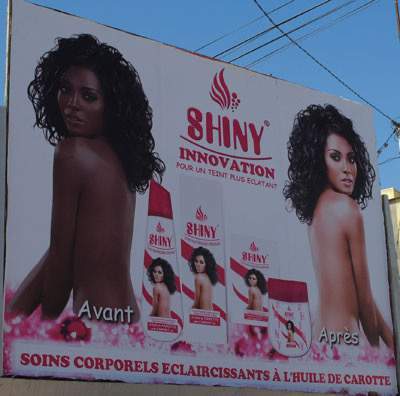
This has led women in particular, to widely practice what is called in Senegal “xeesaal”, a technique of skin bleaching that has become a matter of public health with its many consequences such as skin cancers and despite governments’ efforts to stop it. Recently, advertising skin bleaching products was banned from radios and TV channels in Senegal. Countries like Ivory Coast or Ghana completely forbid the importation of these products but it is completely ignored and the products remain available everywhere, from markets to small stores to higher-end ones.

Some men also strip their skins of any melanin methodically, Congolese men are notorious for their use of the “tchoko” as they call it and I’m always left to wonder, looking at these people’s knuckles or elbows, why they think this is attractive. The irony is that the melanin they hate so much is literally what protects them from the harmful effects of the African sun’s UV (ultraviolet) rays.
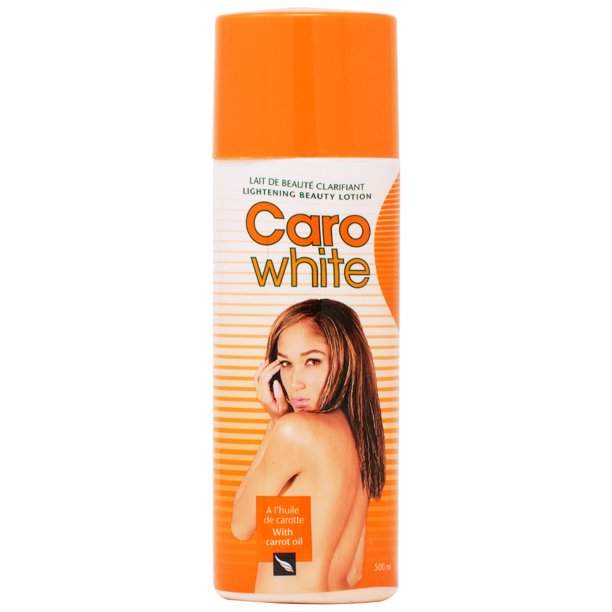
But sub-Saharan Africa is not the only part of the world that experienced white supremacy and consequently, the billion-dollars bleaching industry is thriving in many other parts of the world. South Asia, the Caribbean and the Americas are the bread and butter of these companies. A lot of these products would only be available in those countries with a majority of brown people, along with extremely offensive adverts that associate getting lighter with becoming successful.
The fact that multinationals can still label their products as “whitening” is extremely problematic, to say the least. Even if the word was mainly used to satisfy the Asian markets where people routinely call lightening products (see below) “whitening”.
There has been progress however and companies like L’Oréal and Unilever have agreed to drop the words “white” “whitening” or “fair” from their Skincare products.
Depigmentation & Hyperpigmentation
But there’s a big difference between completely changing your natural skin colour and wanting to address unevenness in your skin tone. Hyperpigmentation is, unfortunately, more common in darker skins. A result of sun damage, hormonal changes and genetic predispositions (melasma) or an inflammation of the skin (acne), darker patches of skin can appear due to melanin overproduction.
And I am convinced that for a lot of the women in Africa using bleaching creams, they want to actually address these issues but have limited access to quality lightening products.
Lightening products sometimes contain the same ingredients used in bleaching creams. Hydroquinone is one of them.
Despite its controversial nature (it has been banned in the EU since 2001 as it is suspected to be a carcinogen), it remains the gold standard to treat hyperpigmentation. It is an effective ingredient if used carefully; it should be used under a dermatologist’s supervision. It can be irritating and cause allergic reactions particularly to those with dry, sensitive skins and can also lead to exogenous ochronosis, a bluish-black discolouration in dark-skinned people if used for too long. So make sure to only use it for a short amount of time and don’t mix it with peroxides (benzoyl peroxide, hydrogen peroxide) or even with acids to avoid any irritation. Pregnant and breastfeeding women should stay clear of it.
Retinol, kojic acid and azelaic acid are all good alternatives you should look for in lightening products. Retinol should be used regardless; it is an excellent way to prevent hyperpigmentation.
For faster results, chemical peels and lasers can make a difference when performed by board-certified dermatologists.
Brightening products are yet another category. Packed with AHAs, BHAs, enzymes or Vitamin C, their goal is to bring radiance to the skin (yes, that JLo glow). My beloved Retinol will also help here.
But the best way to prevent a lot of this as much as possible (and yes, even for darker-skinned people) is to protect yourself from the sun. Limiting sun exposure, especially during the most intense hours of the day but more importantly using sunscreen (and make sure that you do reapply it as needed) are habits that will determine how even your skin looks.
© N’Deye S. Somparé
le problème du colorisme
🇫🇷 “Ah si seulement tu avais été aussi claire que ta mère comment tu aurais été belle”
C’est un de mes oncles qui prononça ces mots un jour ensoleillé d’avril à Conakry alors que je m’appretais à sortir, toute pimpante et pleine de confiance en moi. Et malgré le fait que j’ai toujours entendu ce genre de remarques du fait de ma ressemblance avec ma mère et de son teint très clair, une fois encore, la violence d’une telle assertion me stoppa net dans mon élan. Avant que je ne réalise trés vite à quel point ça ne valait pas la peine de réagir. Ces mots, souvent dits avec tellement de nonchalance par des adultes censés être ceux qui devraient vous guider, sont le résultat de siècles de colonisation. Une époque durant laquelle avoir la peau plus claire était synonyme de privilèges et de faveurs diverses, et qui avait surement pour conséquence d’échapper aux situations pénibles. De la meme manière que les travaux domestiques étaient réservés aux esclaves à la peau plus claire tandis que les esclaves à la peau foncée se coltinaient les taches les plus exténuantes.
Marier une femme à la peau claire est censé apporter de la chance et représente un marqueur social sur, en particulier au Sénégal, pays d’origine de ma mère. Les métis, du fait de leur proximité au Blanc, se retrouvent ainsi considérés comme les plus désirables et c’est avec beaucoup de consternation que je me rappelle à quel point être avec un métis était un objectif en soi dans ma jeunesse. Parfois ce sont les maris meme (ou compagnons) qui exigent de leurs femmes qu’elles se décapent la peau
L’épidémie de dépigmentation de la peau
Vous imaginez bien que dans un tel contexte, les femmes en particulier, ont eu tendance à suivre l’opinion dominante et ont développé des pratiques de dépigmentation de la peau_ xeesaal au Sénégal_ qui sont devenues de véritables problèmes de Santé Publique avec des conséquences parmi lesquelles le cancer de la peau et ceci malgré tous les efforts des gouvernements pour réguler ces pratiques. Il y a à peine trois ans, la publicité des produits dépigmentants a été interdite à la radio et à la télévision Sénégalaise. Des pays comme la Cote d’Ivoire, puis le Ghana ont formellement interdit l’importation de ces produits mais cette interdiction n’est pas suivie d’effets et les produits restent disponibles partout, des étals de marché aux petites échoppes comme dans les magasins les plus prestigieux.
Certains hommes se débarassent aussi de leur mélanine de façon méthodique. Les Congolais en particulier sont connus pour ce qu’ils appellant le “tchoko” et c’est toujours fascinant de voir les jointures des doigts et coudes des gens qui s’éclaircissent la peau, et de se dire qu’ils trouvent ça attirant. Cette mélanine qu’ils détestent tant est pourtant ce qui les protège des effets nocifs des rayons UV (ultraviolet) du soleil Africain.
Mais l’Afrique sub-Saharienne est loin d’etre la seule partie du monde à avoir subi le suprémacisme blanc et l’industrie billionaire en dollars du blanchiment de la peau sévit aussi en Asie du Sud, dans les Caraibes ou dans les Amériques. Beaucoup de ces produits ne sont diponibles que là où il y a des personnes de couleur et souvent accompagnés de publicités extrêmement offensantes qui font croire qu’une peau plus claire équivaut à trouver le succès.
Le fait que des multinationales puissent encore aujourd’hui utiliser le mot “whitening” sur leurs produits est très problématique. Et cela meme si sous cette appellation, il peut s’agir de produits dits de “lightening” (voir plus bas) car en Asie, le “whitening” ne signifie pas tout à fait la meme chose que dans d’autres territoires. Mais il y a du progrès et de grands groupes comme L’Oréal ou Unilever ont finalement accepté de bannir les termes “white” “whitening” ou l’anglais “fair” qui est synonyme de “blanc” de leurs produits Skincare.
Dépigmentation & Hyperpigmentation
Il y a cependant une grande différence entre le fait de vouloir complètement changer la couleur de sa peau et le fait d’avoir une peau qui a des taches brunes et/ou foncées et dont on souhaite se débarasser. L’hyperpigmentation, touche malheureusement beaucoup les peaux noires. Elle peut être causée par une exposition excessive au soleil, être d’origine hormonale ou génétique (pendant la grossesse par exemple, le masque de grossesse), ou être post-inflammatoire (après de l’acné par exemple) La production de mélanine est alors intensifiée dans les zones concernées.
Je reste convaincue que pour beaucoup de ces femmes en Afrique c’est ce probleme des taches pigmentaires qu’elles cherchent à traiter mais finissent par se tourner vers les produits de blanchiment faute d’accès à des produits de meilleure qualité
Les produits “lightening” (difficile à traduire vu que leur but principal n’est pas vraiment d’éclaircir mais d’unifier le teint) contiennent parfois les meme ingrédients que ceux utilisés dans les produits destinés à la dépigmentation. L’hydroquinone est l’un de ces ingrédients. Et malgré toutes les controverses qu’il génère (il est interdit dans l’Union Européenne depuis 2001 car suspecté d’être cancérigène) il reste l’agent le plus efficace pour traiter l’hyperpigmentation à condition d’etre utilisé sous la supervision d’un dermatologue . C’est un ingrédient qui peut être irritant et causer des allergies surtout chez les peaux sèches et sensibles et peut aussi donner aux peaux foncées de l’ochronose exogène si il est utilisé trop longtemps. Il faut donc ne l’utiliser que sur un temps court et ne surtout pas le faire en meme temps que les produits contenant des peroxydes (comme le peroxyde de benzoyl très populaire pour traiter l’acné). Eviter aussi de l’utiliser en meme temps que les acides pour ne pas irriter la peau. Il n’est pas recommendé aux femmes enceintes ou allaitant.
Le Rétinol, l’acide kojique ou l’acide azélaique sont de bonnes alternatives à l’hydroquinone. Le Rétinol devrait être utilisé dans tous les cas, c’est une excellente façon de prévenir l’hyperpigmentation.
Pour des résultats plus rapides, les peelings chimiques et les traitements au laser peuvent se révéler très efficaces.
Les produits décrits comme “Brightening” (souvent traduit comme éclaircissant alors qu’ils sont chargés de redonner de l’éclat à la peau) sont ceux qui souvent contiennent des acides de fruit (AHA), des BHA (l’acide salicylique en est un), des enzymes ou de la Vitamine C. Le Rétinol fait aussi des miracles dans ces formulations.
Mais la meilleure façon de prévenir l’hyperpigmentation est encore d’être très exigeant sur la protection solaire. Limiter l’exposition au soleil, surtout aux heures les plus intenses de la journée, mais aussi utiliser une crème solaire que l’on réapplique régulièrement (oui, meme pour les peaux noires) sont des habitudes qui auront un impact déterminant sur l’homogénéité du teint.
© N’Deye S. Somparé
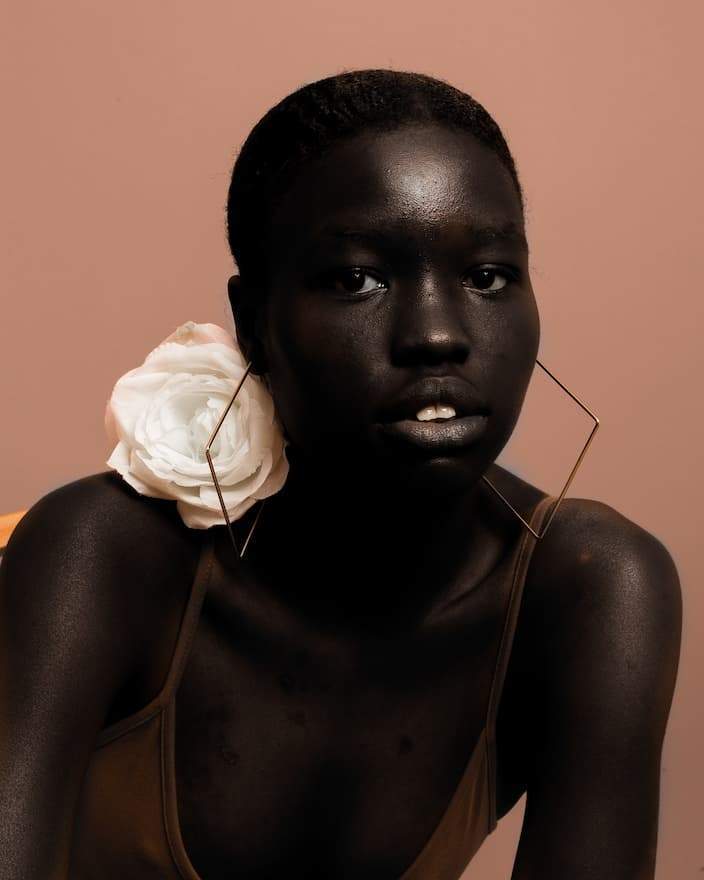
Crédit Photo (Header): Jeune femme Guinéenne par Hokof (IG: hokofphotoworks)

N'Deye
Esthetician trained at Aveda in New York, with a specialization in aromatherapy. I created BalkisBeauty to help you see through the gimmicks and find what works for you.
Read my story →