Let’s Talk About Retinol
· 11 min read
This post contains affiliate links.
As an Amazon affiliate, I earn from qualifying purchases
🇬🇧 Let’s talk about retinol, one of the most hyped skincare ingredients in the world of anti-ageing skincare, acne treatments, and glow-boosting routines… and also, personally, not one of my favourites.
Don’t get me wrong, retinol skincare has its benefits. It’s widely known for helping with fine lines, uneven skin texture, breakouts, and skin renewal. But if you’ve ever tried it, you’ll know it can also be irritating, drying, and just not suitable for every skin type or routine. And honestly? It’s never been an ingredient I’ve fully gotten along with.
As of November 2025, the European Union introduced new cosmetic regulations that limit the concentration of retinol (and related vitamin A derivatives such as retinyl palmitate and retinyl acetate) in skincare products. Under the updated EU cosmetics law, retinol is now restricted to a maximum of 0.3% in face products and 0.05% in body lotions, with stricter labelling requirements also introduced. These changes are part of a wider effort to regulate vitamin A in skincare and cosmetic ingredient safety across Europe.
So in today’s post, I want to break down what retinol actually does, why it’s still such a controversial skincare ingredient, and why — despite all the hype — it’s not something I personally got on well with over the years.
Retinol is a form of vitamin A, and it’s one of the most researched skincare ingredients out there. The reason it’s so popular is that it can encourage your skin to renew itself more efficiently. In simple terms, it helps your skin shed old cells and bring newer, fresher-looking skin to the surface. This is why people use it for things like fine lines, dullness, uneven texture, pigmentation, and breakouts.
But here’s where things get confusing: not all vitamin A skincare ingredients are the same.
There’s a whole “family” of vitamin A derivatives, and they all work slightly differently.
At the gentlest end, you have Retinol Esters. These are basically the “softest” versions of vitamin A in skincare. They need to go through more steps before your skin can turn them into the active form, which means they tend to work more slowly — but they’re usually much kinder and less irritating. They’re often a better option for sensitive skin or anyone who doesn’t want to deal with the classic retinol side effects like peeling, dryness, redness, or that tight, uncomfortable feeling.
Then you have Retinol itself. This is the ingredient most people are talking about when they say “retinol”. It’s stronger than retinol esters because your skin has fewer conversion steps to go through before it becomes active. It can be very effective, but it can also be more irritating, especially if you introduce it too quickly or your skin barrier isn’t in the best place.
Next is Retinal (also called retinaldehyde). This sits between retinol and prescription-strength vitamin A. It’s closer to the active form, meaning it needs fewer conversions in the skin, so it can work faster and potentially give stronger results than retinol. However, that also means it can still irritate some people.
And then there’s Tretinoin, the prescription version. This is already active vitamin A, meaning your skin doesn’t need to convert it before using it. It’s considered one of the strongest forms and has plenty of evidence behind it, but it’s also the one most likely to cause irritation, dryness, peeling, and sensitivity (especially when you’re starting out).
So, if we simplify it:
Retinol Esters → gentler, slower, more beginner-friendly
Retinol → stronger, more common, but can be irritating
Retinal → stronger and faster-acting than retinol
Tretinoin → prescription-strength and the most intense
Synthetic retinoid derivatives include newer retinoids like adapalene and tazarotene, which are engineered to ‘skip the line’, so to speak. They lock directly onto specific receptors in your skin cells to get to work instantly.
The most famous Adapalene on the market is Differin, which got approved back in 2016 as the first prescription-strength retinoid to be sold over the counter (OTC) in the US. It clears breakouts, blackheads and clogged pores.
Ideal for teens and adults struggling with mild to moderate acne, including whiteheads, blackheads, and clogged pores.

Recently, celebrities started raving about a French pharmacy secret, and I started thinking to myself: ‘they’re going to mess this up, they’re going to mess this up’. And sure enough, the A313 cream that used to cost around 5 Euros is now 10.89 Euros in pharmacies, with a Chinese lady at a pharmacy at the foot of the Sacré Coeur telling me it was 20 Euros without blinking an eye. Why not, when the product is retailing for $42 (yes, you heard that right) Dollars on some US websites.
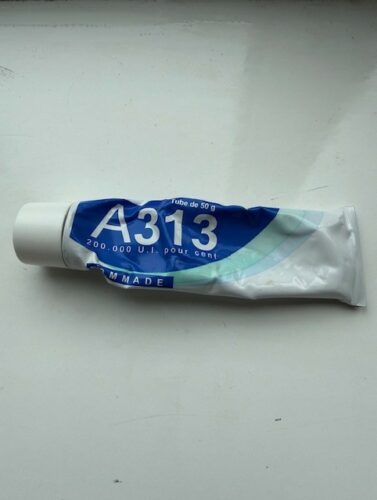
A313 uses Retinol Esters, rather than the more intense forms of vitamin A, which is why I find it much more comfortable for my skin. Its texture is closer to an ointment, which I believe is the reason why it does not irritate at all. It literally acts as an occlusive at the end of your routine to seal in hydration.
Is it the most powerful vitamin A product available? No, at 0,006 percent after its main ingredient, retinyl palmitate, is converted, it’s far from the industry 0,1 to 1 per cent standard, but it works.
It also leaves this itchy feeling that never really goes away, even after years of use. That’s why you have to really make sure that your skin is properly dry before applying it.
Every time I’ve tried a traditional retinol product on my face, I can manage one or two applications before my skin starts feeling as though it’s literally burning. Not a little tingly. Not slightly sensitive. Burning.
More recently, I decided to try retinol on my body. Surely the skin on my arms and legs would be thicker than my face? I tried Topicals’ Slather for the first time and, while I escaped the burning sensation, I was rewarded with intensely dry skin instead.
And that’s why it was important for me to touch on this: a lot of times, the best product for you isn’t the most popular, it’s the one your skin actually wants to use. I started working in my company’s store lately, just a couple of times a week, and I am shocked at how much people go for the viral products, the buzzing ingredients, instead of what’s good for them.
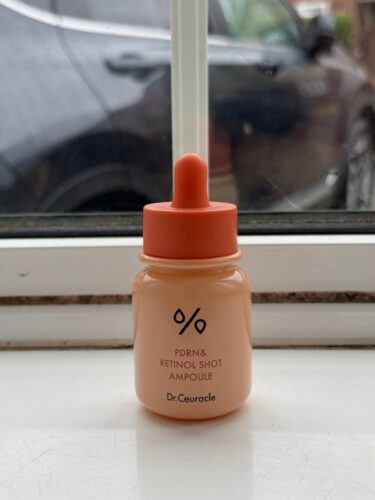
KBeauty latest hot product, Retinal with microspicule delivery, combined with Panthenol&peptides to reduce any peeling

Part of me still hopes I’ll eventually graduate to a proper retinol one day. I’ve been eyeing Shani Darden’s Retinol Reform for years because Kelly Rowland uses it. The science behind them is compelling, and I understand why so many people swear by them.
For now, though, I’m staying loyal to my little French tube.
© N’Deye S. Somparé
PARLONS DE RÉTINOL
🇫🇷 Parlons du rétinol, l’un des ingrédients les plus en vogue dans le monde des soins anti-âge, des traitements contre l’acné et des routines pour un teint éclatant… et, personnellement, pas un de mes préférés.
Attention, je ne dis pas que le rétinol est inutile ! Il est reconnu pour atténuer les ridules, unifier le grain de peau, lutter contre les imperfections et favoriser le renouvellement cellulaire. Mais si vous l’avez déjà essayé, vous savez qu’il peut aussi être irritant, desséchant et tout simplement ne pas convenir à tous les types de peau ni à toutes les routines. Et honnêtement ? Je ne l’ai jamais vraiment apprécié.
Depuis novembre 2025, l’Union européenne a mis en place une nouvelle réglementation cosmétique limitant la concentration de rétinol (et de ses dérivés de vitamine A, comme le palmitate de rétinyle et l’acétate de rétinyle) dans les produits de soin. En vertu de la nouvelle réglementation européenne sur les cosmétiques, la concentration de rétinol est désormais limitée à 0,3 % dans les produits pour le visage et à 0,05 % dans les laits corporels, et des exigences d’étiquetage plus strictes ont été mises en place. Ces changements s’inscrivent dans un effort plus large visant à réglementer la vitamine A dans les soins de la peau et à garantir la sécurité des ingrédients cosmétiques en Europe.
Dans cet article, je souhaite donc vous expliquer le rôle du rétinol, les raisons pour lesquelles il reste un ingrédient controversé et pourquoi, malgré tout l’engouement qu’il suscite, je n’ai personnellement pas réussi à l’apprécier au fil des années.
Le rétinol est une forme de vitamine A et l’un des ingrédients cosmétiques les plus étudiés. Sa popularité s’explique par sa capacité à stimuler le renouvellement cellulaire. En d’autres termes, il favorise l’élimination des cellules mortes et révèle une peau plus jeune et plus fraîche. C’est pourquoi on l’utilise pour atténuer les ridules, raviver le teint terne, unifier le grain de peau, corriger les taches pigmentaires et traiter les imperfections. Mais c’est là que les choses se compliquent : tous les dérivés de la vitamine A pour les soins de la peau ne se valent pas.
Il en existe toute une « famille » , et chacun agit légèrement différemment.
Parmi les plus doux, on trouve les esters de rétinol. Ce sont les formes les plus « douces » de vitamine A utilisées en cosmétique. Leur transformation en forme active par la peau nécessite davantage d’étapes, ce qui signifie qu’ils agissent plus lentement. En revanche, ils sont généralement beaucoup plus doux et moins irritants. Ils constituent souvent une meilleure option pour les peaux sensibles ou pour toute personne souhaitant éviter les effets secondaires classiques du rétinol, tels que la desquamation, la sécheresse, les rougeurs ou cette sensation de tiraillement désagréable.
Ensuite, il y a le rétinol lui-même. C’est l’ingrédient auquel on fait généralement référence lorsqu’on parle de « rétinol ». Il est plus puissant que les esters de rétinol, car sa transformation par la peau est plus rapide. Il peut être très efficace, mais aussi plus irritant, surtout si son utilisation est trop rapide ou si la barrière cutanée est fragilisée.
Vient ensuite le rétinal (ou rétinaldéhyde). Il se situe entre le rétinol et la vitamine A sur ordonnance. Plus proche de la forme active, il nécessite moins de transformations cutanées (une seule étape) et peut donc agir plus rapidement et potentiellement donner de meilleurs résultats que le rétinol. Cependant, cela signifie aussi qu’il peut provoquer des irritations chez certaines personnes.
Enfin, il y a la trétinoïne, la version sur ordonnance. Il s’agit de vitamine A déjà active ; la peau n’a donc pas besoin de la convertir avant utilisation. Considérée comme l’une des formes les plus puissantes et bénéficiant de nombreuses études, c’est aussi celle qui est la plus susceptible de provoquer des irritations, une sécheresse cutanée, une desquamation et une sensibilité (surtout au début du traitement). En résumé :
Esters de rétinol → plus doux, à action plus lente, plus adaptés aux débutants
Rétinol → plus puissant, plus courant, mais peut être irritant
Rétinal → plus puissant et à action plus rapide que le rétinol
Trétinoïne → sur ordonnance, le plus puissant
Les dérivés synthétiques de rétinoïdes incluent des rétinoïdes plus récents comme l’adapalène et le tazarotène, conçus pour agir instantanément. Ils se fixent directement sur des récepteurs spécifiques des cellules cutanées.
L’adapalène le plus connu est Differin, approuvé en 2016 comme premier rétinoïde sur ordonnance à être vendu sans ordonnance aux États-Unis. Il élimine les imperfections, les points noirs et désobstrue les pores.
Récemment, des célébrités ont commencé à vanter les mérites d’un produit de parapharmacie français, et je me suis dit : « Ils vont tout gâcher, ils vont tout gâcher ! »
Et effectivement, la crème A313, qui coûtait environ 5 euros, est maintenant à 10,89 euros en pharmacie. Une vendeuse chinoise dans une pharmacie au pied du Sacré-Cœur m’a même affirmé qu’elle coûtait 20 euros sans sourciller. Après tout, comment pourrait-il en être autrement, quand on sait que le produit se vend jusqu’à 42 dollars (oui, vous avez bien lu) sur certains sites américains ?
La crème A313 utilise des esters de rétinol, plutôt que des formes plus concentrées de vitamine A, ce qui explique pourquoi je la trouve beaucoup plus agréable pour ma peau. Sa texture est plus proche d’une pommade, ce qui, je pense, explique son absence totale d’irritation. Elle agit littéralement comme un film protecteur en fin de routine pour sceller l’hydratation.
Est-ce le produit à la vitamine A le plus puissant du marché ? Non, avec une concentration de 0,006 % après conversion de son principal ingrédient, le palmitate de rétinyle, il est loin de la norme du secteur (0,1 à 1 %), mais il est efficace.
Il laisse aussi une sensation de démangeaison assez ennuyante, même après des années d’utilisation. C’est pourquoi il est essentiel de bien sécher sa peau avant l’application.
Chaque fois que j’ai essayé un produit au rétinol classique sur mon visage, je pouvais supporter une ou deux applications avant que ma peau ne me brûle littéralement. Pas un léger picotement. Pas une simple sensibilité. Une sensation de brûlure.
Plus récemment, j’ai décidé d’essayer le rétinol sur mon corps. La peau de mes bras et de mes jambes devait bien être plus épaisse que celle de mon visage, non ? J’ai testé Slather de Topicals pour la première fois et, si j’ai échappé à la sensation de brûlure, j’ai eu la peau extrêmement sèche. C’est pourquoi il était important pour moi d’aborder ce sujet : bien souvent, le meilleur produit pour vous n’est pas le plus populaire, mais celui qui est fait pour votre peau .
J’ai récemment commencé à travailler dans la boutique de mon entreprise, deux fois par semaine, et je suis sidérée de voir à quel point les gens se ruent sur les produits à la mode, les ingrédients qui font le buzz, au lieu de choisir ce qui est bon pour eux.
Je sais que quelque chose en moi espère encore pouvoir un jour utiliser un vrai rétinol. Cela fait des années que je lorgne sur le Retinol Reform de Shani Darden, car Kelly Rowland l’utilise. Les arguments scientifiques sont convaincants, et je comprends pourquoi tant de personnes ne jurent que par lui.
Pour l’instant, cependant, je reste fidèle à mon petit tube français.
© N’Deye S. Somparé

N'Deye
Esthetician trained at Aveda in New York, with a specialization in aromatherapy. I created BalkisBeauty to help you see through the gimmicks and find what works for you.
Read my story →